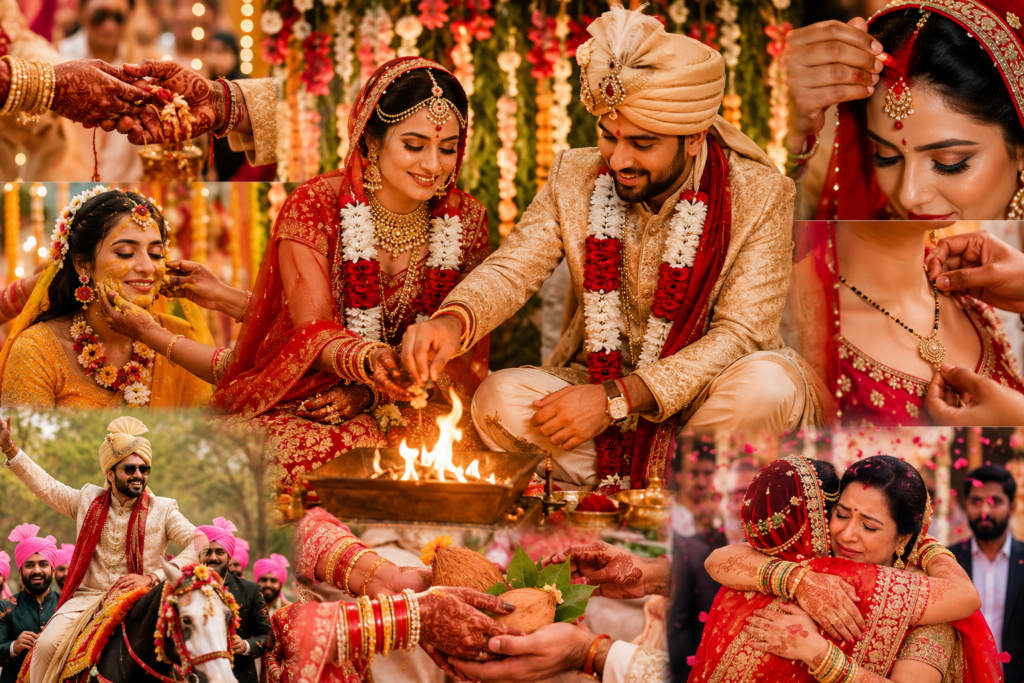
Indian weddings are known for their vibrant celebrations, emotional moments, colorful outfits, and deeply meaningful rituals. Every tradition performed during an Indian wedding carries cultural, spiritual, and emotional significance that has been passed down through generations.
From pre-wedding ceremonies to post-wedding customs, Indian weddings beautifully combine family values, traditions, and joyful celebrations. In this guide, we explore the most popular Indian wedding traditions and the meanings behind these sacred rituals.
The Beauty of Indian Wedding Traditions
Indian weddings are more than just a marriage ceremony. They symbolize:
- The union of two souls
- The coming together of two families
- Spiritual commitment
- Cultural heritage
- Blessings for a happy future
Different regions, religions, and communities across India follow unique customs, but many traditions share similar values of love, respect, prosperity, and togetherness.
Pre-Wedding Rituals
1. Roka Ceremony
The Roka ceremony marks the official announcement of the couple’s union. Families exchange blessings, sweets, and gifts to celebrate the beginning of the wedding journey.
Meaning:
It symbolizes family approval and the strengthening of the relationship between both families.
2. Engagement Ceremony
The engagement is a formal event where rings are exchanged between the bride and groom in the presence of family and friends.
Meaning:
It represents commitment, trust, and the promise of marriage.
3. Mehndi Ceremony
During the Mehndi ceremony, intricate henna designs are applied to the bride’s hands and feet. Music, dance, and celebrations are an important part of this event.
Meaning:
Mehndi symbolizes beauty, happiness, prosperity, and love. Traditionally, darker mehndi color is believed to represent strong love and affection.
4. Haldi Ceremony
A paste made from turmeric, sandalwood, and rose water is applied to the bride and groom before the wedding.
Meaning:
Haldi is believed to purify, protect from negative energy, and bring glowing skin before the wedding day.
5. Sangeet Ceremony
The Sangeet is a joyful musical celebration where family members perform dances and enjoy cultural performances.
Meaning:
It strengthens family bonds and creates happiness before the wedding ceremony.
Main Wedding Rituals
6. Baraat
The groom arrives at the wedding venue with a grand procession of music, dance, and celebrations.
Meaning:
The Baraat symbolizes joy, celebration, and the groom’s journey toward a new phase of life.
7. Jaimala (Varamala)
The bride and groom exchange flower garlands during the ceremony.
Meaning:
This ritual represents acceptance, mutual respect, and the beginning of their partnership.
8. Kanyadaan
In this emotional ritual, the bride’s parents formally give their daughter’s hand to the groom.
Meaning:
Kanyadaan symbolizes trust, blessings, and the transfer of responsibility with love and respect.
9. Mangalsutra Ceremony
The groom ties a sacred necklace called the Mangalsutra around the bride’s neck.
Meaning:
It symbolizes marital commitment, protection, and lifelong companionship.
10. Sindoor Ritual
The groom applies sindoor (vermillion powder) on the bride’s forehead or hair partition.
Meaning:
Sindoor represents marriage, prosperity, and the bride’s new journey as a married woman.
11. Agni Pooja
The sacred fire plays an important role in Hindu weddings. The couple takes vows in front of the holy fire.
Meaning:
Fire is considered a divine witness to the marriage and symbolizes purity and eternal commitment.
12. Saat Phere
The bride and groom walk seven times around the sacred fire while making promises to each other.
Meaning of the Seven Vows:
- Nourishment and support
- Strength and courage
- Prosperity and wealth
- Love and respect
- Family and children
- Health and lifelong companionship
- Friendship and eternal togetherness
Saat Phere is considered one of the most sacred parts of a Hindu wedding.
Post-Wedding Rituals
13. Vidaai
Vidaai is an emotional farewell where the bride leaves her parental home to begin her new life.
Meaning:
It symbolizes a new beginning, emotional transition, and blessings for a happy married life.
14. Griha Pravesh
The bride is welcomed into her new home by the groom’s family.
Meaning:
This ritual symbolizes prosperity, happiness, and acceptance into the new family.
Regional Variations in Indian Weddings
India’s cultural diversity creates unique wedding traditions across different states and communities.
Examples:
- South Indian weddings focus on temple rituals and traditional attire.
- Punjabi weddings are known for energetic celebrations and music.
- Bengali weddings include rituals like Shubho Drishti and Saat Paak.
- Muslim weddings include the Nikah ceremony and Quranic blessings.
- Christian weddings often take place in churches with vows and ring exchange ceremonies.
Each tradition reflects rich cultural values and spiritual beliefs.
Why Indian Wedding Rituals Remain Special
Even in modern times, Indian wedding traditions continue to hold deep emotional and cultural value because they:
- Preserve family traditions
- Strengthen relationships
- Create meaningful memories
- Connect generations
- Celebrate love and unity
Many couples now combine traditional rituals with modern wedding styles to create personalized celebrations.
Final Thoughts
Indian wedding traditions are filled with meaning, emotion, spirituality, and celebration. Every ritual — from Mehndi and Haldi to Saat Phere and Vidaai — carries a beautiful message about love, commitment, family, and togetherness.
Understanding these rituals helps couples and guests appreciate the cultural richness behind Indian weddings. Whether traditional or modern, these ceremonies continue to create unforgettable memories and lifelong bonds.